

Chain-Reaction Collision
Proving an Unavoidable Accident

Background
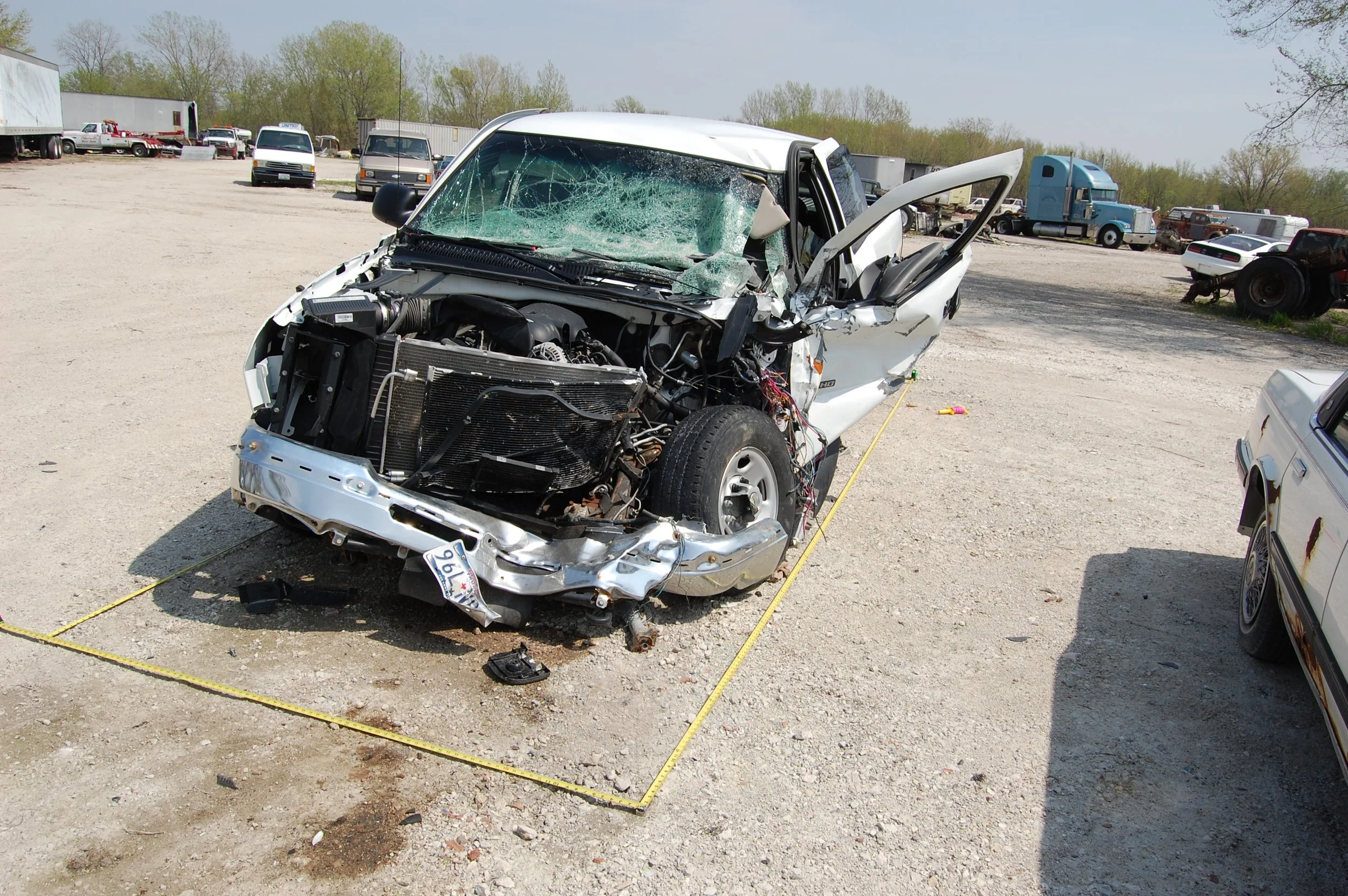
A sudden downpour on an interstate created rapidly deteriorating driving conditions and led to a chain-reaction, five-vehicle accident involving a passenger van, two SUVs, a minivan, and a tractor-trailer. Reduced visibility and changing roadway conditions raised questions regarding the sequence of collisions and whether the truck driver had sufficient time and distance to perceive and avoid the developing hazard.
Approach
Beacon Forensic conducted a comprehensive engineering evaluation that included review of more than 3,000 pages of photographs, depositions, crash reports, and disclosure documents. All involved vehicles were inspected, including data imaging of the tractor’s engine control module (ECM) and crash avoidance system. The evaluation also included examination of physical damage patterns, roadway evidence, and 3D scene documentation, along with detailed analysis of event data, video evidence, and brake system performance. Engineering analysis incorporated physics-based calculations and industry research related to braking distances, jackknife prevention, and perception-reaction times under reduced visibility conditions.

Findings & Outcome
The evaluation determined that multiple vehicles had already collided, leaving disabled vehicles in the travel lane during heavy rain and reduced visibility. As the tractor-trailer approached, the driver perceived the hazard and initiated braking within a response time consistent with an attentive driver. Event data confirmed sustained braking and proper activation of vehicle stability systems, and inspection showed the vehicle was in proper working condition. Analysis further demonstrated that, given the roadway conditions, the required stopping distance exceeded the available distance. Based on these findings, the accident was unavoidable despite appropriate driver response and properly functioning equipment.
Key Takeaway: A comprehensive analysis combining vehicle data, scene evidence, and scientific braking models demonstrated that the tractor-trailer driver acted reasonably and could not have avoided the accident. This case highlights how forensic engineering can clarify complex, multi-vehicle crashes where responsibility is disputed.
The Beacon Difference
From factory floors to highways and industrial facilities, Beacon Forensic applies scientific rigor and real-world engineering experience to reveal how and why failures occur.
Our investigations uncover the truth behind complex mechanical, electrical, and structural events — helping clients assign responsibility, improve safety, and prevent recurrence.