

Mechanical Failure and Driver Response in a Nighttime Crash
Human and Mechanical Failures
Background
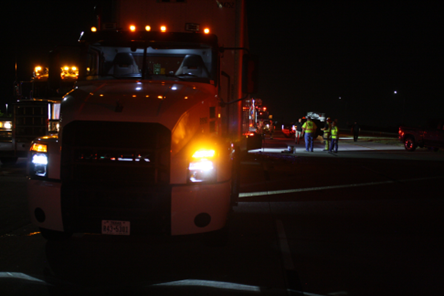
Late at night on a major interstate, a tractor trailer became disabled in a travel lane after an air fitting in its brake system fractured. Moments later, a passenger car traveling in the same lane struck the rear of the stopped trailer at highway speed. Questions arose regarding whether the passenger car driver could have avoided the crash and why the fitting failed.
Approach
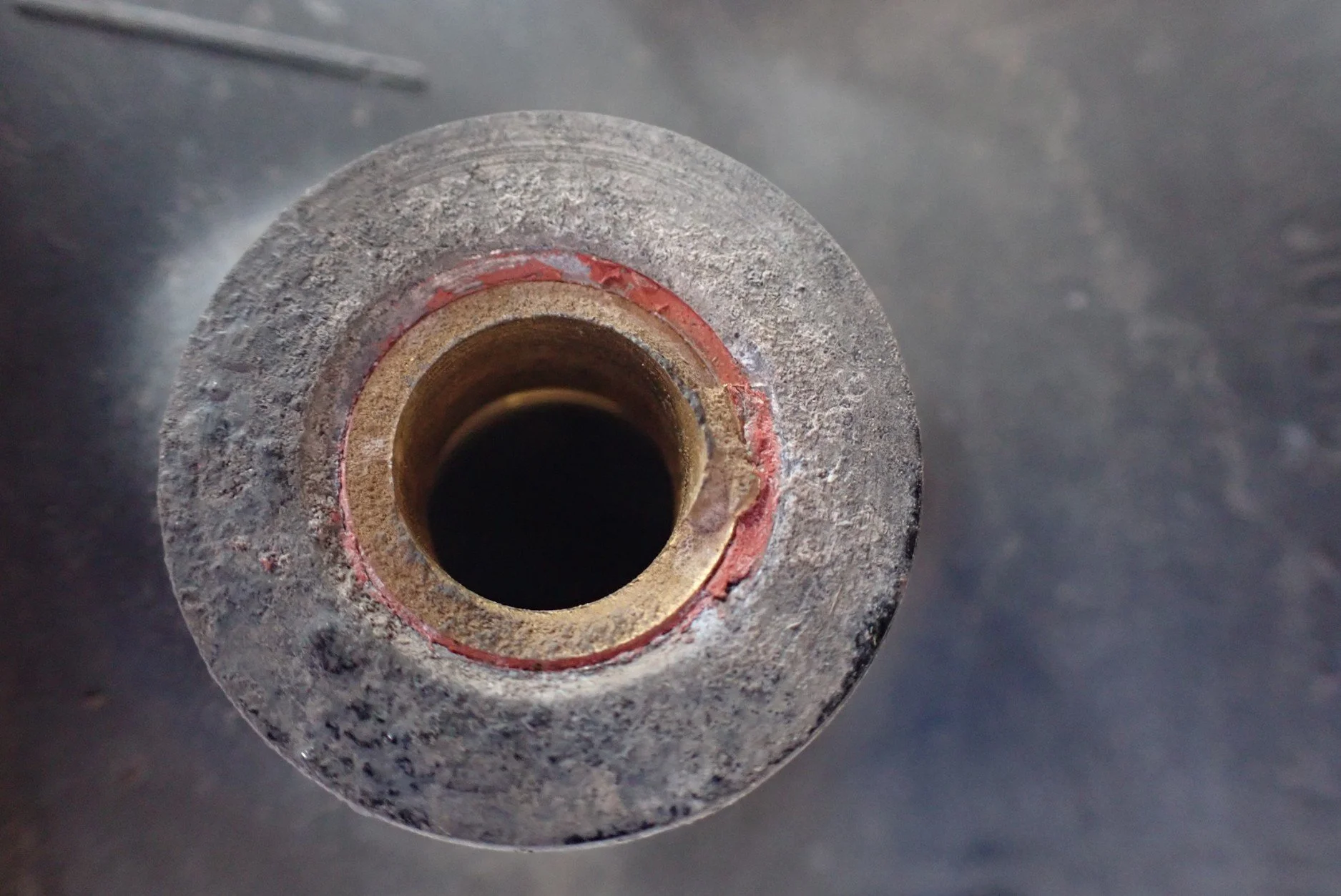
Beacon Forensic’s investigation included a comprehensive inspection of the tractor, trailer, and passenger car to document damage and mechanical condition. The team performed imaging and analysis of the passenger car’s event data recorder to evaluate pre impact data. A detailed examination of the fractured brake air fitting was conducted to determine whether the failure resulted from a defect or external impact. The analysis also included reconstruction of visibility, hazard recognition, and stopping distances under nighttime conditions, along with physics based calculations of perception response time, recognition distances, and braking capabilities at both the speed limit and the vehicle’s recorded speed.
Findings & Outcome
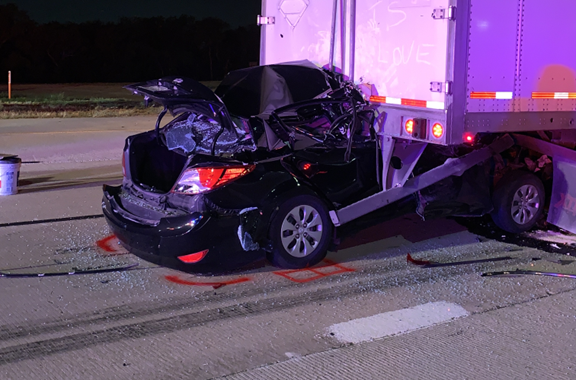
The analysis of available vehicle data showed the passenger car was traveling well above the posted speed limit with no evidence of braking prior to impact, significantly reducing the time available to perceive and respond.
Examination of the fractured brake air fitting indicated an overload failure consistent with the vehicle striking an object in the roadway that damaged the fitting and led to the vehicle becoming disabled. There was no evidence of a defect or maintenance related issue.
Overall, the collision resulted from a combination of reduced reaction time at higher speed, limited driver response, and the impact induced failure of the air fitting that initiated the sequence of events.
Key Takeaway: This case illustrates how mechanical events and driver behavior can interact in highway crashes. Analysis by Beacon Forensic engineers showed that roadway debris impact initiated the sequence, while the severity of the outcome was influenced by inattention from the passenger vehicle driver.
The Beacon Difference
From factory floors to highways, rail systems, and industrial facilities, Beacon Forensic applies scientific rigor and practical mechanical engineering experience to determine how and why failures occur.
Our investigations focus on complex mechanical systems, including vehicles, rail equipment, industrial machinery, and HVAC systems, helping clients assign responsibility, improve safety, and prevent recurrence.